brief encounters: shuffleboarding with neil sedaka

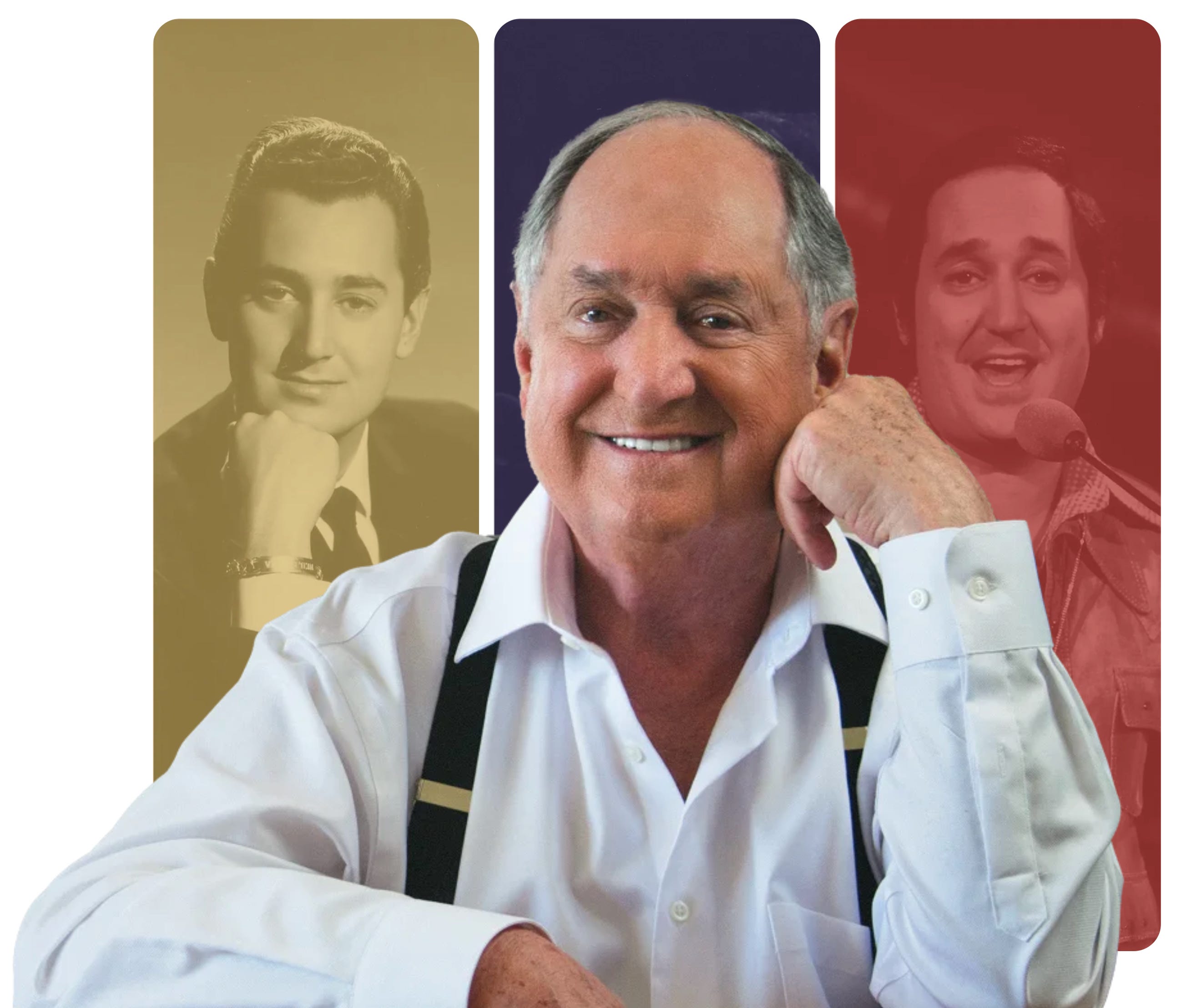
Neil Sedaka entertained generations with his music and charm (photo collage courtesy neilsedaka.com)
In 1970, my maternal grandparents retired and moved from New York to Broward County in Florida. They had narrowed it down to a choice between the community of Greenhaven Section 12 in the city of Tamarac or the nearby neighborhood of Inverrary.
My parents tried to get them to buy a place in the latter, but they chose the former, because Greenhaven 12 was significantly cheaper. As we anticipated, the property value of Inverrary skyrocketed, in part because of the success of Jackie Gleason’s Inverrary Classic golf tournament, while that of the Tamarac location did not.
So anyway, in the early 1970s, my mother, father, brother, sister, and I began going down to Florida every year to visit Grandpa Moe and Grandma Ud.
One afternoon, my father and I were at the Section 12 clubhouse, if you could even call it that, playing shuffleboard when another father-and-son duo arrived.
My father immediately recognized the man, one of my parents’ favorite singers: It was Neil Sedaka, who, like my father, was a Brooklyn boy. My dad, Michael, was born in 1938 and grew up in Flatbush, and Neil came into this world less than a year later, raised in Brighton Beach. Both of their fathers had been taxi drivers; Neil’s parents now lived in Greenhaven 12, in a one-story house not far from my grandparents’. (Neil Diamond’s father also lived in the section; Neil D. was born in Brooklyn in 1941, attended the same high school as my father, Erasmus Hall, and is still alive and kicking at the age of eighty-five.)
I was just a kid, but I knew several of Sedaka’s biggest hits, including “Calendar Girl,” “Happy Birthday, Sweet Sixteen,” and “Breaking Up Is Hard to Do.” So I was more than a little starstruck.
Neil, wearing shorts and flip-flops, introduced us to his young son, Marc (spelled wrong!), and we challenged them to a game.
My father had a blast talking with Neil, who was friendly and kind — until we kicked their butt and they opted not to have a rematch, which probably would have disappointed Neil’s dad.
Discussing his childhood, Neil once told Grand magazine, “My father was very quiet, very sweet, very good-natured. He took me to ball games and prizefights. He was a great tennis player and shuffleboard player.”
My father was very sweet, very good-natured, and took me to ball games and prizefights, but I wouldn’t call him quiet. He was outgoing and tons of fun, extremely social. He was also a great tennis player and shuffleboard player. In fact, the last time I spent with him was on the tennis court.
Over the years, whenever I hear a Neil Sedaka song — among his other smashes are “Laughter in the Rain,” “Bad Blood,” and “Oh! Carol” — I think of shuffleboard, flip-flops, Sedaka, and my father.
My dad died in 1985 in Mexico at the age of forty-seven.
Neil passed away yesterday in Los Angeles at the age of eighty-six.
As Sedaka sang so elegantly in the original “Breaking Up Is Hard to Do”: “To do do, down dooby doo down down / Comma comma, down dooby doo down down / Comma comma, down dooby doo down down . . . / Don’t you leave my heart in misery / If you go, then I’ll be blue.”
There are a lot of people feeling blue today, me included.
[You can follow Mark Rifkin and This Week in New York every day here.]
Great story! The tv movie from the 70s-- "Breaking Up is Hard to Do" - which uses his slow remake version as title theme also has really stuck with me.
I much appreciate this because my close friend Larry Loonin and I often have talked about Neil Sedaka, who grew up near him in Brighton Beach. Larry knew him well in the 50s, even went to his apartment. He knew Neil’s parents and lyricist, too. The other Neil grew up a couple of blocks away and went to Lincoln before Erasmus but Larry never knew him. I grew up further away, although I spent several summers at Brighton Beach Baths, and Neil Sedaka was much talked about as a local boychik by everyone, so I felt I almost knew him, too. He was a year older than me. His voice was so high-pitched we used to think he was gay (he wasn’t). It is a phenomenon how many Jewish kids from Brooklyn during that era became musical superstars, from Lou Reed (moved at ten) to La Streisand, Kazan, Manilow, and so on.